Beijing’s sudden policy maneuver on October 16, 2026, officially triggered the China AI export ban 2026, placing strict cross-border barriers on next-generation computing algorithms, advanced foundation weights, and dual-use technological architectures. This aggressive state directive reshapes international technology governance overnight, intensifying operational friction between Eastern and Western cloud infrastructure providers. Global enterprise leaders now face an urgent infrastructure realignment as critical artificial intelligence supply chains fracture along geopolitical fault lines.
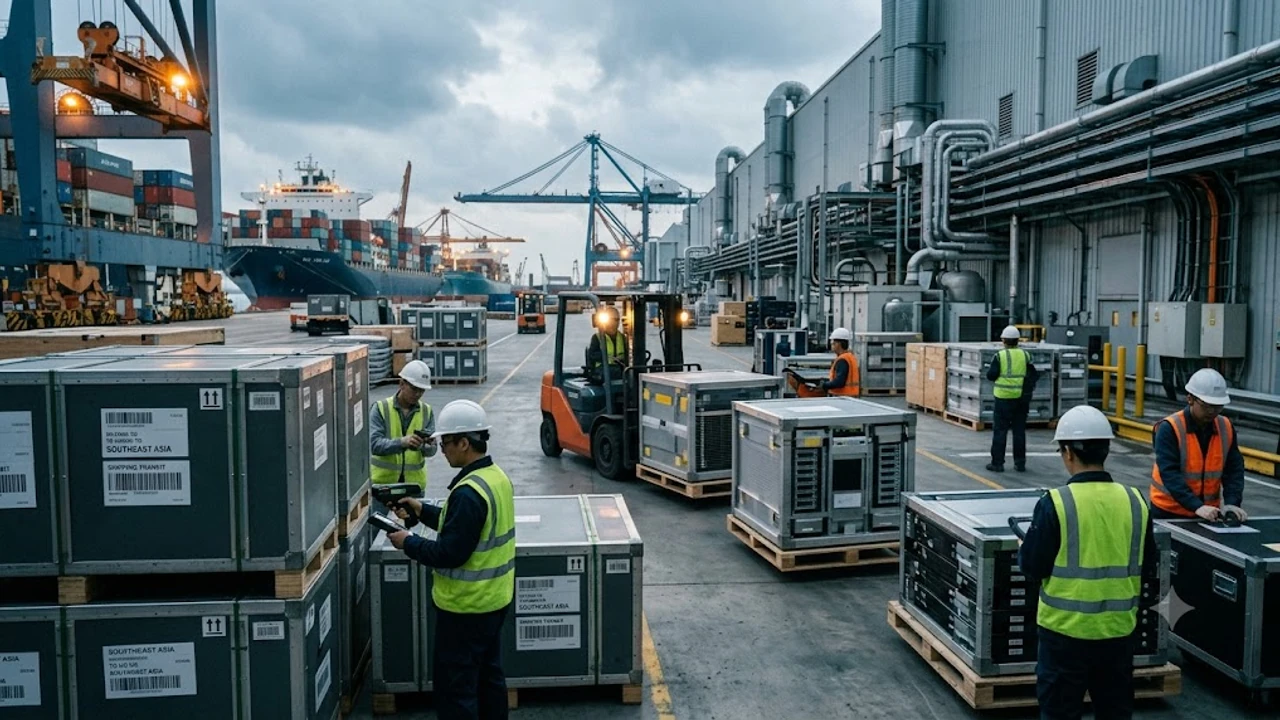
The Anatomy of Beijing’s Sudden AI Export Restrictions
Breaking Down the October 16 Dual-Use Mandate
The joint decree issued on October 16, 2026, by the Ministry of Commerce (MOFCOM) and the Cyberspace Administration of China (CAC) codifies immediate state licensing barriers for cross-border software code transfers. Instead of focusing solely on hardware tariffs, this policy targets algorithmic logic and mathematical model weights capable of dual-use civil-military computation. Any multinational research center or domestic firm shipping proprietary datasets, autonomous decision engines, or compiled inference stacks overseas must now submit every repository to state security reviews.
Commercial operators face a strict 30-day compliance window to catalog their cross-border data pipelines or risk immediate operational shutdowns. Western trade analysts view this abrupt regulatory maneuver as Beijing’s decisive reprisal against Western wafer-fab tool restrictions and advanced GPU export caps implemented throughout earlier quarters.
Core Technologies Targeted: Foundation Models to Autonomous Systems
The regulatory annex pinpoints precise technical thresholds that automatically freeze outbound data transmission:
- High-Density Foundation Weights: Any neural network trained with a computational density exceeding $10^{25}$ floating-point operations (FLOPs) incorporating proprietary Chinese data corpora.
- Autonomous Decision-Making Engines: Algorithmic architectures designed for real-time spatial navigation, drone routing, and industrial robotic process automation.
- Specialized AI Compiler Middleware: Software layers that optimize low-latency neural processing directly across heterogeneous server silicon.
“The inclusion of low-latency inference compilers in this export regime marks an aggressive tactical pivot: Beijing is no longer merely protecting frontier research; it is actively weaponizing execution middleware against cross-border integration.”
By targeting the intermediate compiler and execution layers, the mandate intentionally paralyzes collaborative workflows across global open-source ecosystems.
The Immediate Western Regulatory Response Across Washington and Brussels
Within 36 hours of the announcement, regulatory bodies across North America and Europe convened emergency task forces. The US Department of Commerce’s Bureau of Industry and Security (BIS) immediately opened consultations with enterprise infrastructure providers to evaluate exposure across American tech hubs in Shanghai, Shenzhen, and Beijing. Concurrently, European Union officials warned that unilateral software blockades disrupt joint climate simulation and smart-mobility initiatives established under EU-Asia digital accords.
This rapid friction shatters lingering hopes for steady bilateral tech diplomacy. While observers previously anticipated diplomatic guardrails, the harsh reality of algorithmic blockades mirrors the escalating friction documented in Trump-Xi Summit 2026: Why AI Guardrails Matter. Trade officials in Washington have already signaled retaliatory screening for cross-border developer licensing before the current quarter wraps up.
Shifting Semiconductor and Cloud Supply Chains
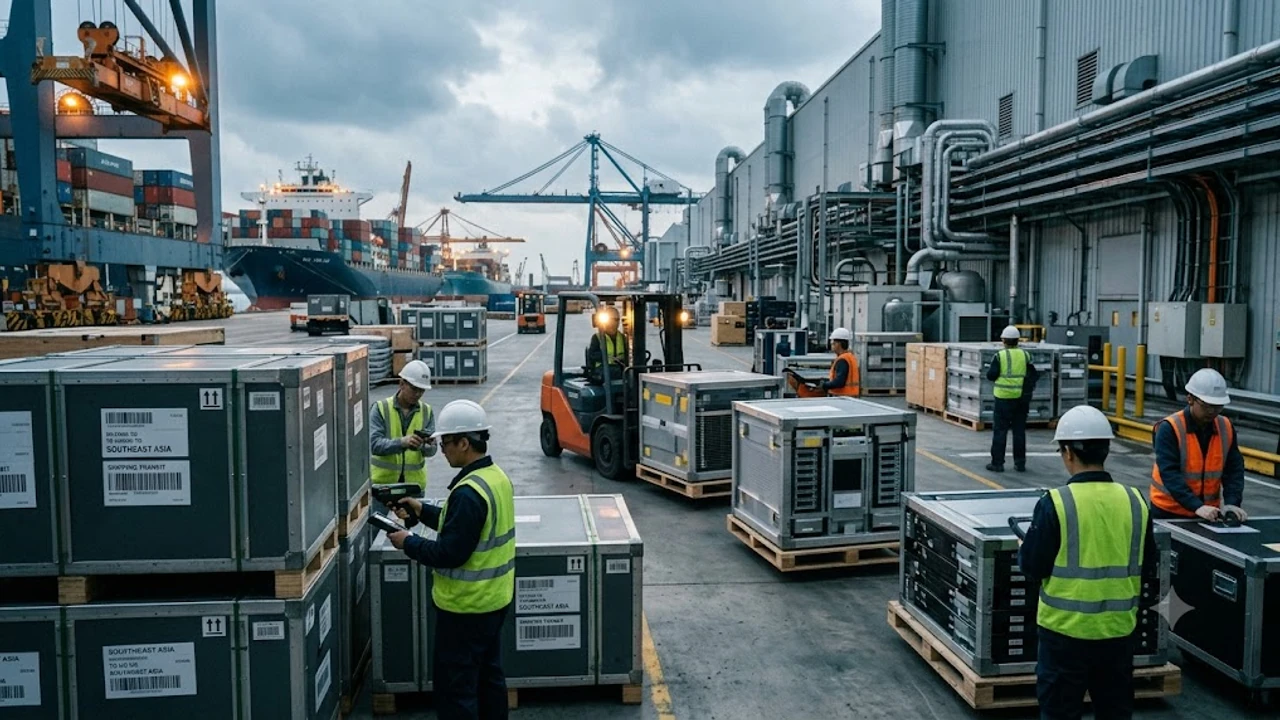
Cross-Border Hardware Bottlenecks for Global Data Centers
The regulatory freeze hits downstream server assembly lines with immediate friction. Even though core processor silicon is fabricated elsewhere, roughly 38% of global motherboard surface-mount operations, power delivery module packaging, and baseboard management controller (BMC) firmware burning remains centralized within Chinese manufacturing zones.
Under the new mandate, hardware testing facilities located inside Chinese special economic zones cannot export assembled server racks containing pre-flashed enterprise microcode without dedicated state clearance. Multinational hardware suppliers face cascading shipment delays, driving up procurement expenses for finished AI servers scheduled for delivery to Western cloud regions through early 2027.
The Strategic Pinch on South Korea’s Memory Giants: Samsung and SK Hynix
South Korea’s top-tier memory producers sit directly on the geopolitical fault line. Samsung Electronics and SK Hynix maintain essential fabrication and packaging facilities across Xi’an and Wuxi, producing high-bandwidth memory (HBM3E, HBM4) and enterprise-grade NAND flash components vital for modern data clusters.
The October 16 mandate creates three critical operational choke points:
- Firmware Validation Holds: Memory controllers utilizing co-developed predictive wear-leveling algorithms cannot move between Chinese packaging lines and South Korean design centers without state inspection.
- Bifurcated Production Allocation: Memory makers must physically separate assembly lines feeding Western AI accelerators from those configured for domestic Chinese processors.
- Regulatory Compliance Crossfire: South Korean conglomerates must maintain strict alignment with tightened American trade policies, a dynamic explored in detail in US Secondary Tariffs 2026: 3 Tech Supply Chain Impacts.
This intense regulatory cross-pressure compels leadership teams in Pangyo and Suwon to accelerate factory decentralization plans, shifting testing and advanced packaging lines into secondary corridors across Southeast Asia.
Diverging Software Ecosystems: The Bifurcated Tech Architecture
The direct outcome of Beijing’s export curbs is the definitive bifurcation of the global software stack. Modern engineering workflows once relied on open code repositories, synchronized model weights, and unified toolchains. This mandate forces developers into two isolated environments: an internal Chinese stack running on domestic platforms, and an external Western stack hosted on non-Chinese infrastructure.