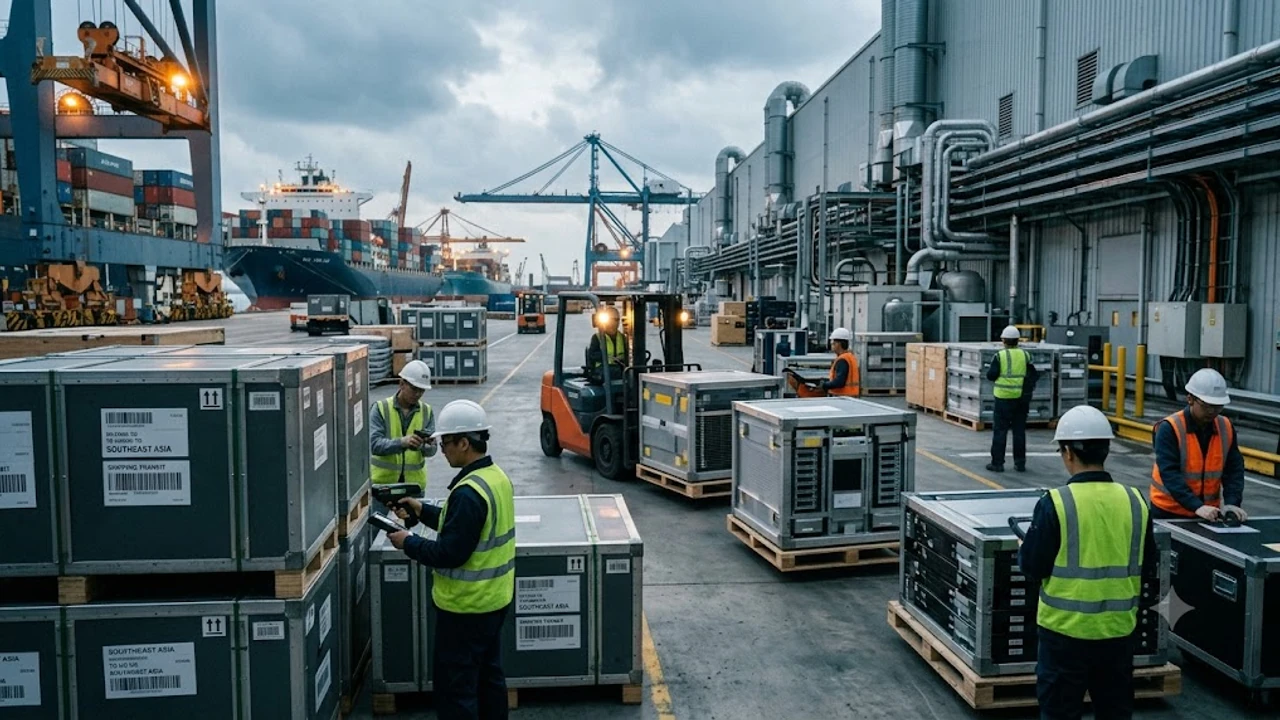
Anthropic Custom AI Chips are reshaping how frontier AI research labs manage their compute architecture in 2026. The creator of Claude has officially launched a dedicated hardware initiative to design in-house silicon, offering salaries reaching $485,000 for top semiconductor engineers to solve severe processing bottlenecks. As specialized AI workloads demand unprecedented infrastructure, this strategic pivot directly impacts cloud infrastructure strategies and hardware supply chains worldwide.
The Big Shift: Anthropic Enters the Custom Silicon Arena
Inside Anthropic’s Multimillion-Dollar Hiring Spree for Hardware Engineers
Reports published on August 6, 2026, confirmed that Anthropic has launched an aggressive talent acquisition drive targeting elite silicon design engineers. The hiring push features compensation packages topping $485,000 annually for roles centered on Application-Specific Integrated Circuit (ASIC) development, system-on-chip (SoC) architecture, and high-bandwidth memory integration.
By building a dedicated hardware engineering team, Anthropic is transitioning from a purely software-focused AI lab into a vertically integrated technology enterprise.
This initiative aims to solve compute availability issues that have constrained model training schedules throughout the past year. By designing propriety chips tailored specifically for Claude’s transformer architectures, Anthropic seeks to bypass the multi-month waiting lists associated with commercial accelerators.
Breaking Away from Single-Supplier Dependency on GPU Giants
Relying on off-the-shelf graphics processing units (GPUs) creates severe operational vulnerabilities for top-tier AI developers. Commercial accelerators are optimized for broad general-purpose matrix multiplication rather than the specific attention mechanisms that power advanced language models.
- Supply Bottlenecks: Allocation delays from dominant chip suppliers cap training execution speed.
- Cost Inefficiencies: General GPUs carry higher profit margins and energy overhead than specialized ASICs.
- Architectural Mismatches: Standard hardware configurations force developers to adapt software to fixed hardware constraints. Developing proprietary silicon enables Anthropic to decouple its scaling timeline from third-party manufacturing schedules and pricing pressures.
Co-Designing Hardware and Claude Software for Peak Efficiency
Software-hardware co-design represents the core advantage of in-house silicon development. When compiler engineers work alongside silicon architects, they can optimize hardware structures for specific mathematical operations used during inference and training.
Custom ASICs eliminate unnecessary silicon real estate dedicated to legacy graphic operations or unused data types. This specialization yields significant improvements in energy efficiency per token, directly lowering the operational costs of running persistent, large-scale reasoning models.
Global Chip Bottlenecks & The Vertical Integration Race
Comparing Custom Chip Strategies: Anthropic, OpenAI, and Meta
The move toward custom silicon is accelerating across the entire frontier AI ecosystem. However, companies are adopting vastly different operational approaches depending on their capital allocation strategies and software requirements. CompanyCustom Silicon StrategyPrimary FocusKey Supply Chain StrategyAnthropicIn-House ASIC DesignClaude Inference & Training OptimizationDirect Foundry Partnerships & High-Yield DesignOpenAIHybrid Design & Foundry AlliancesNext-Gen Foundation ModelsBroad Co-Development Deals with Tech ConglomeratesMetaMTIA (In-House Accelerator Series)Recommendation & Generative WorkloadsContinuous In-House Deployment Across Data Centers While Meta has already deployed generations of its Meta Training and Inference Accelerator (MTIA), Anthropic’s focused entry centers purely on maximizing high-throughput reasoning workloads. Readers interested in broader infrastructure shifts can explore our analysis on 2026 Physical AI Guide: Why Cloud 3.0 Changes Tech.
Financial and Operational Pros and Cons of In-House ASIC Production
Building custom chips presents major operational tradeoffs that require massive long-term capital commitment. [ Financial Commitments ] —> [ Mask Sets & Tape-Out ] —> [ Tape-Out Risk ] | | v v [ High Upfront Capital ] [ Potential Architecture ] [ $100M+ per Tape-Out ] [ Flaws Require ] [ Costly Respins ]
Key Advantages:
Margin Preservation: Eliminates third-party markups on high-volume production chips.
Tailored Bandwidth: Optimized memory buses designed specifically for high-parameter inference.
Strategic Autonomy: Control over production priority during global supply disruptions. Key Challenges:
Extreme Upfront Capex: Tape-out costs for sub-3nm nodes regularly exceed $100 million per iteration.
Long Lead Times: Design cycles from tape-out to volume production take 18 to 24 months.
Execution Risk: Architecture flaws discovered post-fabrication require costly silicon respins.
The Supply Chain Realities: Manufacturing Partnerships and Foundry Bottlenecks
Designing silicon in-house does not eliminate foundry dependencies. Anthropic must still secure manufacturing capacity from pure-play semiconductor foundries capable of advanced node processing.
With leading-edge nodes heavily booked, securing wafer allocations for advanced packaging technologies like CoWoS (Chip-on-Wafer-on-Substrate) remains a competitive battlefield. Success requires early multi-year commitments with global semiconductor manufacturing partners to guarantee physical delivery of packaged chips.
Impact on the Global Tech Supply Chain & Memory Giants
Shifts in HBM3e/HBM4 Demand for Samsung Electronics and SK Hynix
함께 읽으면 좋은 글
- 2026 Heatwave: 5 Best Personal Cooling Tech Gadgets
- Why Agentic AI Interfaces Are Replacing Traditional Mobile Apps in 2026
#AnthropicCustomAIChips #GlobalTrends #Anthropic #Custom #Chips #House #Silicon