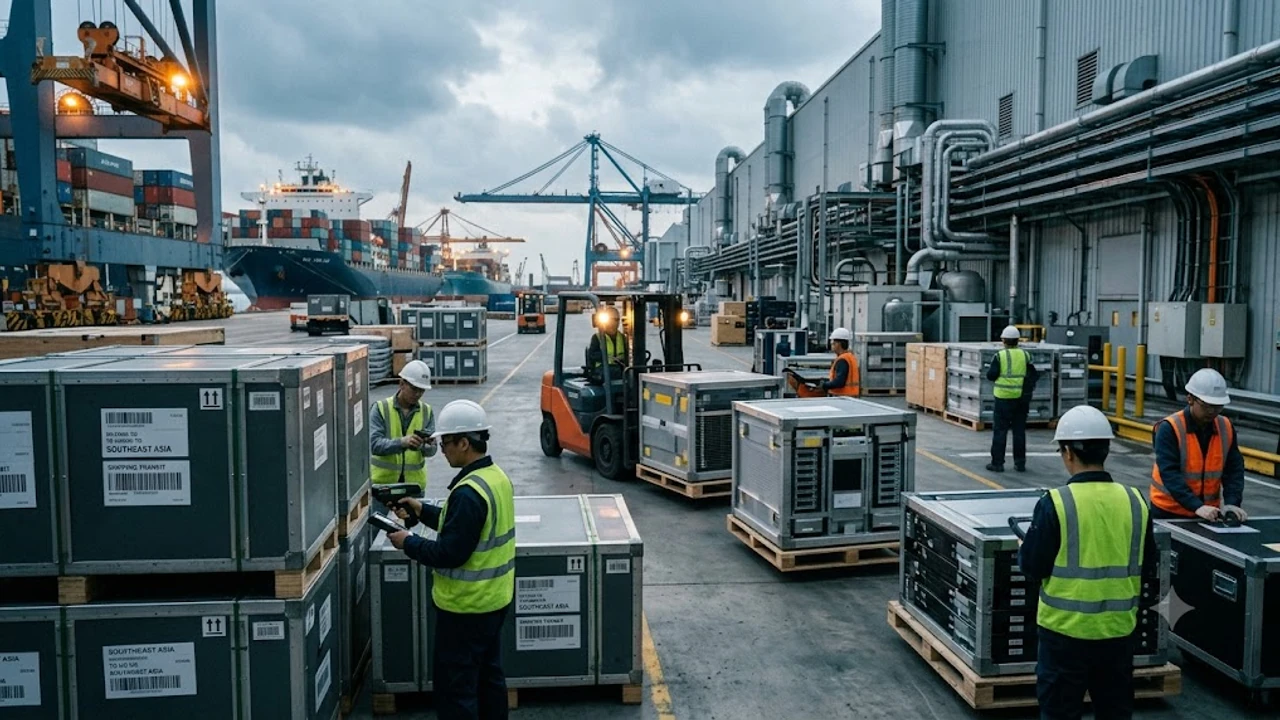
Alphabet initiated a massive $25 billion debt offering on August 10, 2026, marking one of the largest corporate bond sales in tech history to fund its accelerating artificial intelligence footprint. This unexpected fundraising maneuver highlights how the Alphabet bond sale AI capex strategy is reshaping corporate finance as hyperscalers rush to secure power grids and next-generation silicon. As enterprise compute demands surge worldwide, Google’s massive capital injection signals a dramatic shift in how Big Tech balances short-term liquidity against long-term AI market leadership.
Google’s $25 Billion AI Infrastructure Bet: What Happened?
The Record-Breaking Debt Financing Deal
In an audacious move that caught Wall Street analysts off guard, Alphabet issued a tranche of bonds structured across multiple maturity dates, raising $25 billion in fresh capital within a single week. Institutional demand was overwhelming, with order books exceeding twice the offered amount despite persistent macroeconomic uncertainties.
“Alphabet is essentially locking in financing at current rates to guarantee uninterrupted capital deployment over the next three fiscal years,” noted a senior tech credit analyst at J.P. Morgan on August 12, 2026.
By leveraging its stellar AAA-adjacent credit rating, Alphabet effectively minimized its borrowing costs while ensuring a dedicated war chest solely earmarked for infrastructure scaling.
TPU Chips and Next-Gen Data Center Expansion
The primary allocation of these debt proceeds centers on expanding proprietary hardware capacity. Google’s custom Tensor Processing Units (TPUs) have become critical in lowering training and inference costs relative to third-party GPUs.
- Custom Silicon Scaling: A significant portion of the $25 billion funds the manufacturing run of next-generation TPU v6 pods.
- Hyperscale Data Centers: Funding targets mega-facility construction projects across North America and Europe, specifically aimed at handling heavy multi-modal workload processing.
- Cooling Infrastructure: Capital is directed toward liquid-cooling technology retrofits essential for ultra-high-density racks operating above 100kW per cabinet.
Wall Street’s Reaction to Escalating Capex
Equity markets initially responded with mixed sentiment, as investors weighed immediate balance sheet leverage against long-term competitive moat creation. Alphabet’s stock experienced minor intraday volatility before stabilizing as major brokerages reiterated buy ratings, interpreting the move as an aggressive offense rather than a defensive necessity. The liquidity cushion guarantees that core operations, including Search and YouTube, remain untouched by the immense capital drain required by foundational AI models.
Big Tech AI Capex Wars: Comparing the 2026 Giants
Alphabet vs. Microsoft vs. Meta Capital Expenditure
The arms race for AI infrastructure has reached unprecedented financial scale in 2026. Comparing projected full-year 2026 capital expenditure across top-tier tech firms reveals a stark escalation in cash deployment:
| Company | Projected 2026 AI Capex | Primary Financing Method | Key Focus Area |
|---|---|---|---|
| Alphabet | $65 Billion - $70 Billion | Debt Issuance ($25B Bond Sale) + Operating Cash Flow | TPU Silicon & Owned Hyperscale Data Centers |
| Microsoft | $75 Billion - $80 Billion | Operating Cash Flow + Azure Credit Syndication | Cloud Data Centers & OpenAI Compute Agreements |
| Meta | $50 Billion - $55 Billion | Corporate Debt & Cash Reserves | Open-Source Llama Clusters & Consumer AI Devices |
This capital sprint demonstrates that scale remains the ultimate competitive advantage. For deeper analysis on global technology policy and infrastructure shifts, read about US Secondary Tariffs 2026: 3 Tech Supply Chain Impacts.
Hardware Bottlenecks: Memory Chips and Power Grids
Access to funding is no longer the sole bottleneck for tech giants; physical real estate, high-performance components, and electrical grid capacity dictate execution speed.
- High-Bandwidth Memory (HBM) Shortages: Next-generation AI accelerators depend heavily on HBM3e and HBM4 stacks, leading to intense pre-allocation wars among hyperscalers.
- Energy Grid Constraints: Data center construction timelines are increasingly dictated by local electrical power utilities, accelerating private investments into nuclear, geothermal, and advanced storage options.
- Supply Chain Friability: Geopolitical shifts have forced tech giants to build redundant supply networks for critical server components and specialized cooling units.
Short-Term Debt Risks vs. Long-Term AGI Dominance
Executing a $25 billion bond sale adds structural debt service obligations to Alphabet’s balance sheet. While manageable given Google’s immense operating profits, this strategy compresses profit margins if enterprise AI monetization takes longer than expected. Executives are betting that early dominance in autonomous agents and multi-modal models will yield high-margin recurring software revenues capable of absorbing debt costs easily over the coming decade.
The South Korean Tech Connection: HBM Memory Demand Spike
Why SK Hynix and Samsung Electronics Win Big
Alphabet’s massive infrastructure outlay sends shockwaves directly to South Korea’s technology ecosystem. As Google scales up its TPU server farms, demand for High-Bandwidth Memory (HBM) modules hits new historic highs.
- SK Hynix Dominance: As the primary supplier of advanced HBM3e units, SK Hynix benefits immediately from mega-cap debt raises targeted at data center assembly lines.
- Samsung Electronics Market Capture: Samsung’s dual capability in high-density server DRAM and advanced chip foundry services positions it as a crucial secondary partner as Alphabet diversifies its vendor ecosystem to mitigate supply bottlenecks.
The Ripple Effect on Korea’s Semiconductor Supply Chain
The influx of capital from U.S. hyperscalers directly benefits South Korea’s secondary and tertiary tech suppliers. Equipment manufacturers specializing in wafer inspection, heat dissipation materials, and packaging substrates are experiencing record order backlogs through the second half of 2026.
“Every dollar raised by Silicon Valley hyperscalers eventually translates into wafer starts in East Asia,” noted a semiconductor supply chain analyst in Seoul on August 11, 2026. “Korean vendors producing extreme ultraviolet (EUV) peripheral tools and specialized packaging equipment are seeing full capacity commitments into mid-2027.”
Global Hardware Reliance on Korean Chipmaking
Alphabet’s $25 billion bond sale underscores the global technology industry’s deep reliance on East Asian manufacturing expertise. Without high-yield production from Korean semiconductor facilities, Big Tech’s massive capital investments would stall at the procurement stage. This deep integration reinforces South Korea’s role as the indispensable hardware backbone for global artificial intelligence scalability.
What Big Tech’s Spending Surge Means for Tech Investors
Key Metrics to Track in Upcoming Earnings Reports
Investors navigating this high-capex environment must adjust their analysis beyond traditional price-to-earnings ratios. Evaluating corporate performance now requires close attention to structural indicators:
- Free Cash Flow Conversion: Measure how efficiently revenue converts to cash after subtracting escalating AI infrastructure spending.
- Cloud Infrastructure Margin Trends: Monitor whether Google Cloud and Azure maintain operating margin expansion while absorbing massive depreciation costs from new data centers.
- Custom Silicon Utilization Rates: Assess the percentage of workloads executing on lower-cost internal chips (such as TPUs) versus higher-cost third-party silicon.
For additional macroeconomic contexts affecting global markets, explore our analysis on U.S.–Iran Standoff & The Str.
Potential Risks in Enterprise AI Monetization Timelines
The main risk facing Alphabet and its peers is the potential lag between capital expenditure and enterprise software revenue generation. While cloud infrastructure rental revenues are growing steadily, application-layer monetization remains in its early stages. If corporate buyers slow down their enterprise AI software adoption while Big Tech continues to spend at a $25 billion debt-fueled pace, software sector valuations could face repricing pressure during late 2026 and early 2027.
Strategic Takeaways for Tech & Finance Professionals
Alphabet’s $25 billion bond sale signals that the AI infrastructure expansion phase is far from complete. Technology leaders must prepare for continued hardware competition, while financial analysts must monitor interest coverage ratios and capital efficiency metrics very closely.
- For Enterprise IT Buyers: Anticipate greater cloud service stability and raw compute availability as newly funded data centers come online over the next 12 to 18 months.
- For Hardware Vendors: Component demand remains exceptionally high, though supply chain execution and yield management remain critical execution risks.
- For Institutional Investors: Focus on companies with direct balance sheet strength capable of sustaining heavy capital outlays without diluting equity value.
#GlobalTrends #Alphabet #Google #AICapex #Semiconductors #SKHynix #SamsungElectronics #TechFinance #2026